
If you’ve ever imagined a creature that looks like it belongs in a fantasy novel, the Tennessee Cave Salamander might be it. With its pale, almost ghost-like skin and life deep in underground cave systems, this rare amphibian is fascinating and mysterious. Found only in a small corner of the country, it’s one of the few amphibians in North America that spends its entire life underground.
Size & Physical Appearance
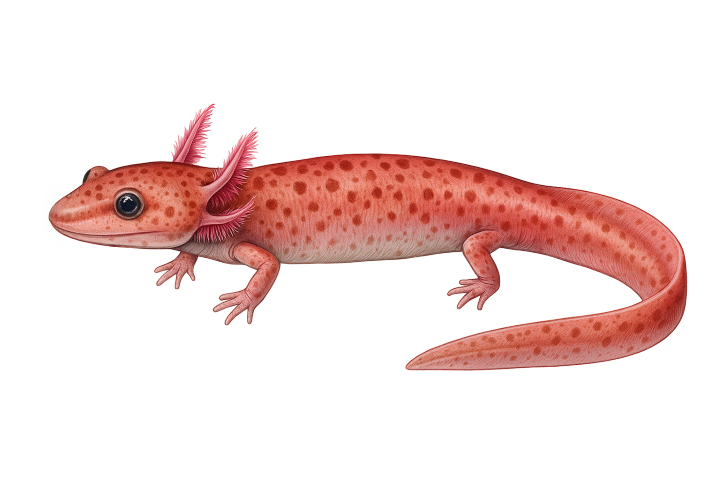
Tennessee Cave Salamanders are medium to large for salamanders, usually measuring between 4.5 to 8 inches in total length. They’re slender-bodied with pink to light orange skin that can sometimes appear translucent, showing internal organs underneath — a feature that makes them look almost otherworldly.
They have a broad, flat head with tiny or reduced eyes, a tell-tale sign that they’ve adapted to a life in complete darkness. Another striking feature: they retain their external gills into adulthood—feathery, red structures on either side of the head that help them breathe underwater, a condition known as neoteny. Unlike many other salamanders, they never go through a full metamorphosis to become land-dwellers.
There’s not much visual difference between males and females, at least not without close scientific inspection.
Habitat and Range
As their name suggests, Tennessee Cave Salamanders are found almost exclusively in limestone cave systems with streams or pools of water. These habitats need to be dark, cool, and humid — the kind of underground warrens where humans rarely venture.
They’re considered endemic to the United States and have an extremely limited range, mainly the Cumberland Plateau region in central Tennessee and parts of northern Alabama and Georgia. Most live at low to mid elevations, nestled within spring-fed cave streams. Because they live underground, their exact range is hard to map and is likely underestimated.
Diet
In their pitch-black world, Tennessee Cave Salamanders are opportunistic carnivores. They eat mostly small aquatic invertebrates, including:
- Crustaceans
- Insect larvae
- Small worms
They use a kind of sit-and-wait strategy, lurking in rocky crevices until prey comes close enough to snap up with a quick strike. Since food can be scarce in caves, these salamanders have slow metabolisms and can go surprisingly long periods without eating.
Lifespan
In the wild, their exact lifespan isn’t well-documented, mostly because they’re so hard to study. Scientists estimate they can live at least 10 to 15 years, and it’s possible they live even longer in ideal conditions. In captivity, where studied more closely, they’ve been known to live past 17 years.
Identification Tips
If you’re crawling through a Cave in Tennessee (carefully and legally, of course), and you see a pale, pinkish salamander with external gills and tiny eyes, there’s a good chance it’s the Tennessee Cave Salamander. Here’s how to tell it apart from similar species:
- Spring Salamander (Gyrinophilus porphyriticus): While closely related and similar in shape, Spring Salamanders usually live above ground in forest streams. They’re darker in color (pinkish-orange to reddish-brown) and have fully functioning eyes.
- Olm or other European cave salamanders: You might see photos of these online, but they’re not found in North America. Tennessee Cave Salamanders are one of the very few cave-adapted species native to the U.S.
It helps to know that this species is usually only found well inside caves, far from daylight. They’re uniquely adapted to that kind of life.
Fun Fact
Tennessee Cave Salamanders are neotenic, which means they keep their juvenile features—like gills—even as they mature. This is a rare trait among amphibians and helps them survive in their oxygen-rich aquatic cave habitats. While many salamanders lose their gills and live on land as adults, this species stays in the water for life.
Final Thoughts
Because of its specialized habitat and limited distribution, the Tennessee Cave Salamander is considered vulnerable and is protected in some areas. If you ever have the chance to see one, it’s a true honor — and a reminder of how many secrets still lurk beneath our feet.
If you’re exploring caves, please tread lightly. Cave environments are incredibly fragile, both for the animals living there and the ecosystem as a whole. Observing these salamanders respectfully helps ensure they’re around for future generations to discover.