
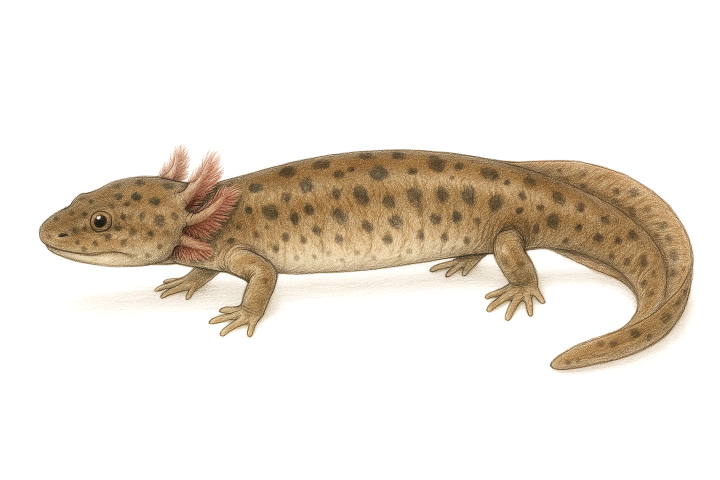
The Neuse River Waterdog is a fully aquatic salamander found only in North Carolina. It’s a bit of a local legend—secretive, unusual-looking, and rarely seen unless you’re in just the right spot. With feathery gills and a flattened body built for life in flowing water, this species has some standout features that make it one of the most fascinating amphibians in the southeastern U.S.
Size & Physical Appearance
Adult Neuse River Waterdogs typically measure between 6 to 9 inches in length, including their tails. Their color ranges from muddy brown to grayish, often speckled with dark spots. The belly is usually a pale gray or lighter color.
One of their most distinctive features is a set of large, bushy red gills on either side of their head. These are external gills that help them breathe underwater.
They also have short legs, a flat head, and a long, paddle-like tail—all adaptations for navigating their aquatic environment. Males and females look similar, though males tend to have a slightly broader head during breeding season. Juveniles look like smaller versions of adults and keep their gills throughout life, since this species never goes through metamorphosis to live on land.
Habitat and Range
The Neuse River Waterdog is an endemic species, which means it’s found nowhere else in the world except eastern North Carolina. It lives only in the Neuse and Tar-Pamlico River basins.
Unlike frogs and some salamanders that use ponds or ditches, this waterdog needs clean, flowing streams and rivers. It prefers areas with rocky or sandy bottoms and plenty of cover, like submerged logs and leaf litter.
You won’t find them in super-high elevations—these amphibians are mostly in lower elevation Piedmont and Coastal Plain streams.
Diet
Neuse River Waterdogs are opportunistic feeders. They eat a mix of aquatic prey, including:
- Insects and insect larvae
- Small crustaceans like crayfish
- Worms
- Snails
They hunt by sense of smell and touch, often rooting through the streambed at night. They’re nocturnal, so most of this action happens after dark.
Lifespan
In the wild, these waterdogs can live for about 7 to 10 years, though exact lifespan data is limited. In captivity, similar species have lived over 15 years, but detailed info on this specific species under human care is still being studied.
Identification Tips
It’s easy to confuse a Neuse River Waterdog with some other aquatic salamanders if you’re not looking carefully. Here’s how to tell them apart:
- Versus Eastern Mudpuppy (Necturus maculosus): Mudpuppies are bigger (up to 16 inches) and are found farther north. Their spots tend to be more obvious and consistent. Neuse River Waterdogs are smaller, with more variable spotting, and are only found in the central and eastern parts of North Carolina.
- Versus larval salamanders: Some juvenile salamanders have external gills, but they usually metamorphose into land-dwellers. Waterdogs keep their gills for life. If it has gills and you’re still seeing it fully aquatic as an adult, you’re likely looking at a waterdog.
Also, these salamanders are most active at night and can be tough to find. They usually stay hidden under rocks or debris during the day.
Fun Fact
Despite their name, Neuse River Waterdogs aren’t dogs at all—but when handled, they can make a squeaky yelping noise (sort of like a dog’s whine). That, plus their wriggly bodies, might be why people started calling them “waterdogs” in the first place.
In Summary
The Neuse River Waterdog is a truly North Carolinian amphibian—found nowhere else and perfectly adapted for a life underwater. With its bushy gills and secretive lifestyle, it’s a great example of how diverse and surprising our freshwater ecosystems can be.
If you’re exploring eastern North Carolina’s rivers and streams, keep an eye out under rocks and logs. You just might spot one of these aquatic wonders—though they’re experts at staying hidden from sight.
Just remember: these creatures are sensitive to pollution and habitat destruction. Keep rivers clean and tread lightly, and you’ll help protect not just the waterdog, but dozens of other species that depend on the same ecosystem.