
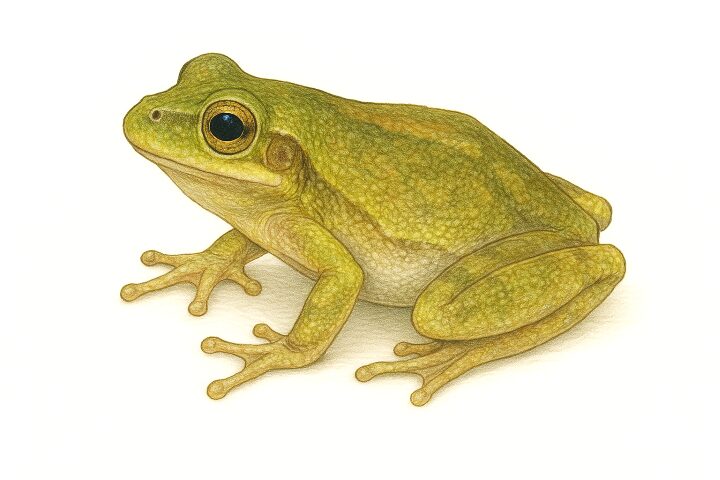
Ever heard a frog that sounds like a squeaking toy? Meet the Squirrel Tree Frog, one of the most charming and adaptable little frogs in the southeastern United States. Don’t let the name fool you — this frog doesn’t hang out with squirrels, but it does make a squirrel-like chatter when it calls. With a talent for camouflage and a flexible lifestyle, the Squirrel Tree Frog is a classic example of a frog that thrives near people as well as in the wild.
Size & Physical Appearance
Squirrel Tree Frogs are pretty small. Adults usually measure around 1 to 1.5 inches long, about the size of a paperclip. They’re smooth-skinned and can come in several different colors, including green, brown, gray, or even yellowish. Some individuals have markings like light stripes along the sides or tiny dark spots, while others are completely plain.
One really cool thing? They can change color depending on things like temperature, humidity, or what surface they’re sitting on. That can make it tricky to identify them based on color alone.
Males and females look very similar, although males may have a slightly darker throat during breeding season due to their vocal sacs. Juveniles tend to look like smaller, lighter-colored versions of adults.
Habitat and Range
These frogs are found across much of the southeastern U.S., especially in states like Florida, Georgia, South Carolina, North Carolina, Alabama, Louisiana, Mississippi, and parts of Texas. They live in a variety of low-elevation habitats, from pine forests and wetlands to suburban yards and gardens.
Squirrel Tree Frogs are excellent climbers and love to hang out on shrubs, window sills, porch lights — really anywhere that’s a bit moist and offers insect snacks. They’re especially common in areas with a mix of natural and human-made environments.
Diet
Like most tree frogs, the Squirrel Tree Frog is an insect-eater. It feeds mostly on small invertebrates such as:
- Flies
- Beetles
- Ants
- Moths
- Spiders
They’re also known to hang out under porch lights or around other outdoor lights at night, snacking on the insects that get attracted to the glow. Think of them as nature’s pest control!
Lifespan
In the wild, Squirrel Tree Frogs typically live around 2 to 5 years, though life expectancy can vary depending on environmental conditions and predators. In captivity, with good care, some individuals might live a little longer.
Identification Tips
Squirrel Tree Frogs can be easy to confuse with other small tree frogs, especially the Green Tree Frog (Hyla cinerea) and the Cuban Tree Frog (Osteopilus septentrionalis) in areas like Florida.
Here’s how to tell them apart:
- Squirrel Tree Frogs are smaller and usually lack the bright white stripe down the side that Green Tree Frogs have.
- Cuban Tree Frogs are larger and can get much bigger, and they often have warty or bumpy skin, while Squirrel Tree Frogs are smooth.
- Squirrel Tree Frogs often have more muted or variable colors and may show speckling or faint patterns that the others do not.
Their call is another giveaway — it’s a squeaky, nasal “waaack” sound that’s often compared to a squirrel chattering or a rubber duck toy.
Fun Fact
Squirrel Tree Frogs are such skilled color-shifters that they’ve earned the nickname “chameleon frogs” in some areas. Depending on their mood and environment, their skin color can change from bright green to dull brown or even gray. It’s not quite full-on chameleon powers, but it’s pretty impressive for a little frog barely bigger than your thumb.
Whether they’re tucked into bromeliads or resting on your window screen, Squirrel Tree Frogs add a lot of charm to the southern night chorus. They may be small, but once you get to know them, they’re easy to appreciate — and hard to forget.