
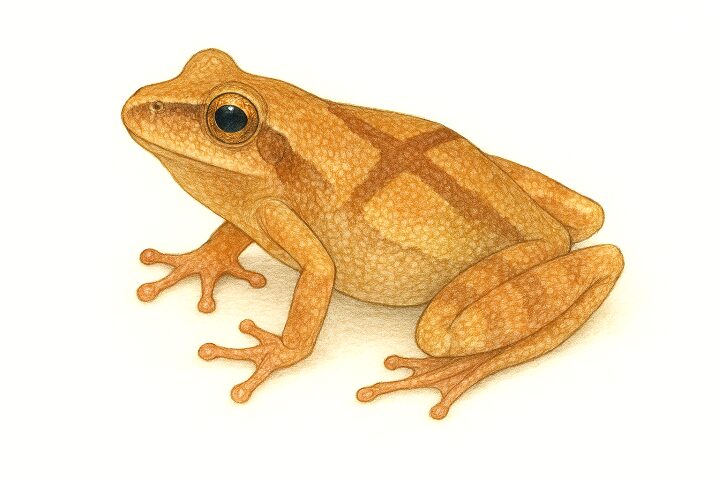
The Spring Peeper is one of the smallest frogs in North America, but you’ll definitely hear it before you see it. Its famous “peep” chorus is a sure sign that spring has arrived, often ringing through woodlands and wetlands like nature’s alarm clock. Don’t let its tiny size fool you — this little tree frog plays a big role in the seasonal soundtrack of eastern North America.
Size & Physical Appearance
Spring Peepers are small frogs, typically only about 0.75 to 1.25 inches long — roughly the size of a paperclip. They have smooth, tan to light brown bodies, sometimes with a slightly pinkish or gray hue. One of the best ways to recognize them is by the distinct dark X-shaped marking on their back. That “X” gives them their scientific name, crucifer, which means “cross-bearer.”
Males and females look similar, but males are usually a bit smaller and may have a darker throat, especially during breeding season (due to all that singing). Juveniles look like mini versions of the adults but can be even harder to spot due to their tiny size and camouflage.
Habitat and Range
Spring Peepers are common in eastern and central North America. You’ll find them from southeastern Canada down through the eastern United States, reaching as far south as Florida and as far west as parts of Minnesota and Texas.
They thrive in moist woodlands, wetlands, swamps, and grassy lowlands. During the breeding season, they need access to temporary ponds, ditches, or other shallow water bodies. Outside of that, they’re usually tucked away under logs, leaf litter, or bark during the day. Spring Peepers can also be found at low to moderate elevations, though they’re more common in lowland areas.
Diet
Like many small frogs, Spring Peepers are insectivores. Their diet includes small invertebrates like:
- Ants
- Beetles
- Spiders
- Moths
- Flies
They’re nocturnal hunters, most active at night when insects are buzzing around. Thanks to their sticky tongues and quick reflexes, they’re great at catching prey on the move.
Lifespan
In the wild, Spring Peepers usually live about 2 to 3 years. If they survive predators and harsh winters, some can live a little longer. In captivity, they can live up to around 4 years with proper care, though they aren’t commonly kept as pets.
Identification Tips
Spring Peepers are often confused with other small frogs — especially other chorus frogs or tree frogs. Here are a few ways to tell them apart:
- Look for the X-mark on the back — this is the clearest visual clue.
- Listen for their call — a high-pitched, repetitive “peep… peep… peep.” It’s quite distinct and rings out in chorus during early spring evenings.
- Compared to true tree frogs like the Gray Treefrog, Spring Peepers are much smaller and don’t change color as dramatically.
- Chorus Frogs (like the Western Chorus Frog) have stripe patterns instead of the X and often a more “trill-like” call.
Fun Fact
Spring Peepers actually produce an antifreeze-like substance in their bodies that helps them survive freezing temperatures. In really cold climates, parts of their body can literally freeze solid — heart and all — and then thaw out and function normally in spring. It’s like nature’s version of cryogenic sleep!
Whether you’re hearing their first calls at the end of winter or trying to spot one in a marshy meadow, Spring Peepers are a great example of how small creatures can have a big impact. They’re also a fun and accessible species for kids and families to learn about — keep an ear out on your next early spring walk!