
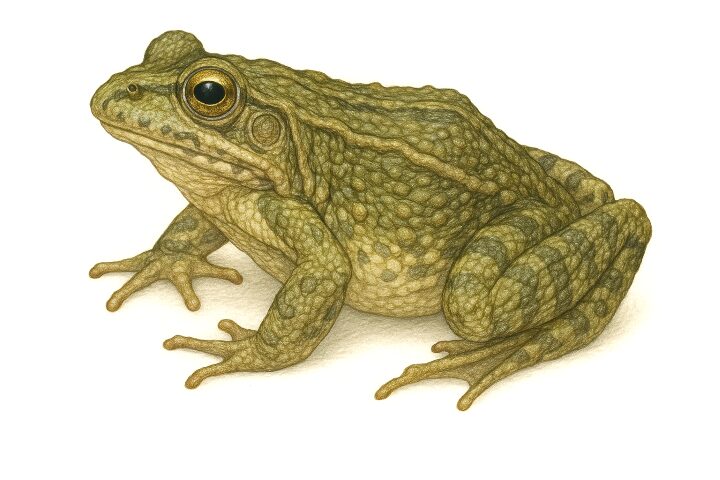
The Wrinkled Frog is a small, quirky-looking amphibian with – you guessed it – wrinkly skin. Known for its bumpy texture and understated looks, this frog may not win any frog beauty contests, but it sure is fascinating once you get to know it. It’s one of the few frog species that managed to hold its own in both freshwater and more human-altered habitats.
Size & Physical Appearance
Wrinkled Frogs are relatively small, typically growing between 1.5 to 2.5 inches (about 4 to 6.5 cm) in length. Their body color tends to be grayish brown to dark olive, often with irregular blotches or mottled patterns that help them blend into shady riverbanks and rocky areas.
True to their name, Wrinkled Frogs have rough, wrinkled skin — especially along their backs and sides. Their limbs are fairly slender, and their toes are partially webbed. Males can look slightly more rugged during the breeding season due to seasonally swollen thumbs and slightly darker throats.
Habitat and Range
Here’s where things get interesting — while the Wrinkled Frog is more commonly associated with Asia (it’s native to Japan, in fact), there have been cases of introductions outside its native range. However, as of now, Glandirana rugosa is not native to the United States and has not been recorded as an established amphibian species here.
If you came across this listing while looking for frogs with wrinkly skin in the U.S., it’s possible you’re thinking of a similar-looking native species like the Pickerel Frog or a particularly bumpy-looking Southern Leopard Frog.
This frog generally prefers cool, clear freshwater streams, rice paddies, ditches, and marshy areas. It does well at a range of elevations from sea level to mountainous regions around 6000 feet in its native areas.
Diet
Wrinkled Frogs aren’t picky eaters. In the wild, they feed on a mix of small insects, spiders, worms, and occasionally smaller aquatic invertebrates. Their diet varies depending on the season and what’s available — if it moves and it’s small enough, it’s fair game.
Lifespan
In the wild, Wrinkled Frogs typically live around 5 to 8 years. In captivity, with proper care, they may live slightly longer, though they’re not commonly kept as pets in the U.S. due to their limited availability and non-native status.
Identification Tips
If you’re looking at a frog and wondering if it’s a Wrinkled Frog, here are a few things to keep in mind:
- Skin texture: Very bumpy or wrinkled appearance, more so than most U.S. frogs.
- Body shape: Slim with relatively long limbs and pointed snouts.
- Mottled coloring: Brown or gray patterns that provide camouflage in muddy waters and underbrush.
Because this species is not native to the U.S., you’re unlikely to see one in the wild unless you’re traveling abroad. Similar native frogs like the American Toad or Wood Frog can sometimes have rough skin — but usually not to the same degree as Glandirana rugosa.
Fun Fact
The Wrinkled Frog has the ability to thrive in surprisingly urban environments — including roadside ditches and rice paddies. In parts of Japan, it’s not unusual to hear their sharp, squeaky calls echoing from irrigation canals in the middle of town.
Bottom Line
While the Wrinkled Frog isn’t a native species of the United States, it’s an interesting amphibian to know about — especially if you’re comparing frog species or learning more about global amphibian diversity. Its rough appearance and resilience in human-altered habitats make it a standout. If you’re looking for similarly bumpy frogs in the U.S., start with native species like the American Toad or certain chorus frogs.
Want more U.S. frogs? Check out our guide to frogs that really live in your backyard!