
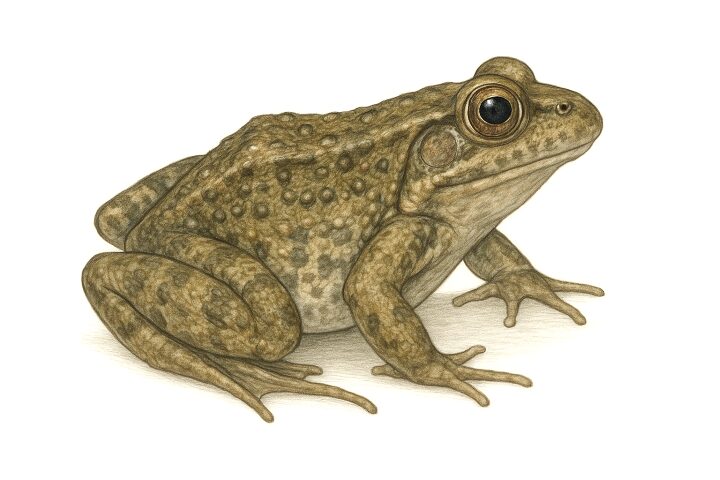
The Dusky Gopher Frog is one of the rarest amphibians in the United States — and also one of the most mysterious. Native to the southeastern U.S., this frog is so elusive that for a long time, it was thought to be extinct. With its chubby body, bumpy skin, and almost comical way of covering its eyes with its front feet, the Dusky Gopher Frog is both quirky and critically endangered. It’s currently on the federal Endangered Species List and has become a symbol for habitat conservation across the Gulf Coast.
Size & Physical Appearance
Adult Dusky Gopher Frogs range from about 3 to 4 inches in length. Their bodies are stout with rough, wart-like skin. You’ll typically see a mottled mix of dark gray, brown, and black on their backs, which helps them blend in well with the pine forest floor. Their undersides are usually a creamy white color with dark spots.
Males and females look pretty similar, but males tend to be slightly smaller with larger thumbs (which help during mating). Juveniles are generally lighter in color and smaller in size but have the same bumpy texture on their skin.
Habitat and Range
This species is a true habitat specialist. Dusky Gopher Frogs are found only in a very small part of the southeastern United States, primarily in southern Mississippi. Historically, they ranged across parts of Louisiana and Alabama too, but today their natural populations are restricted to just a few breeding ponds in forest habitats dominated by longleaf pine.
They need two very specific types of habitat to thrive:
- Sandy upland forests with dry, loose soil for burrowing and shelter.
- Temporary, fishless ponds for breeding — these are seasonal wetlands that fill with rain but dry up later in the year.
These frogs spend most of their lives underground, often using abandoned gopher tortoise burrows or holes made by other animals.
Diet
Dusky Gopher Frogs are opportunistic insectivores, which means they’ll eat just about any small invertebrate they can catch. Their diet includes beetles, crickets, ants, spiders, and even the occasional snail or worm.
They hunt primarily at night and use their sticky tongues to snag prey. Because they’re so secretive and spend much of their time underground, there’s still a lot we don’t know about their feeding behaviors.
Lifespan
In the wild, it’s estimated that Dusky Gopher Frogs live about 6 to 10 years, though it can be hard to pin down exact numbers because of their elusive nature. Captive populations have lived longer — sometimes up to 12 years — under managed care.
Identification Tips
Telling a Dusky Gopher Frog apart from similar frogs, like the Southern Leopard Frog or Pig Frog, can be tricky unless you’re really looking closely. Here are a few tips:
- Skin texture: Dusky Gopher Frogs have very bumpy, warty skin. Leopard Frogs tend to have smoother skin.
- Color pattern: Their dark, blotchy patterns might resemble other species, but they typically lack the pronounced ridges seen on Leopard Frogs.
- Behavior: They are much more secretive and terrestrial than many similar frogs. If you see a frog around a sandy burrow in dry pine forest, that’s a clue it could be a Dusky Gopher Frog.
It’s worth noting that unless you’re in southern Mississippi and near a known breeding pond or conservation area, you’re unlikely to run into one in the wild.
Fun Fact
When threatened or stressed, the Dusky Gopher Frog often does something that looks like it belongs in a cartoon — it covers its eyes with its front feet. Scientists aren’t totally sure why they do this, but some believe it might be a defensive behavior to protect their eyes or confuse predators. Either way, it’s one of the more endearing and oddball traits in the amphibian world.
Why This Species Matters
The Dusky Gopher Frog has become a flagship species for longleaf pine ecosystem restoration. Saving this frog means protecting a whole community of plants and animals that depend on the same type of fire-dependent habitat. It’s a great example of how helping one rare animal can help entire ecosystems bounce back.
If you’re exploring ways to support conservation or just love learning about rare wildlife, the Dusky Gopher Frog is a fascinating and important species to know about.