
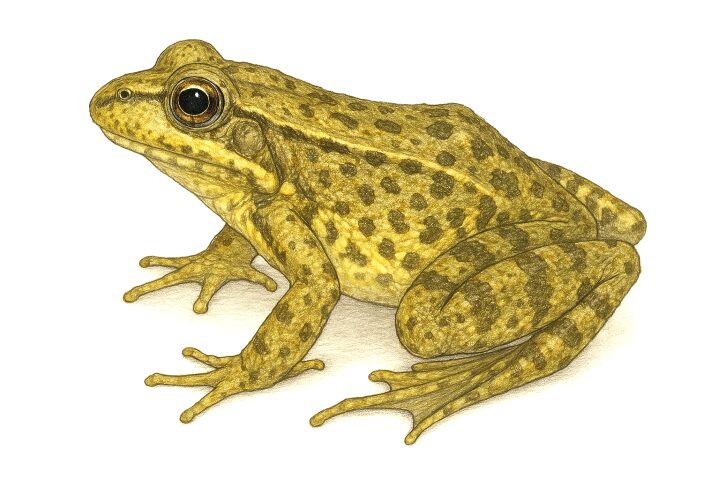
Once common in the high mountains of Southern California, the Southern Mountain Yellow-legged Frog is now one of the rarest amphibians in the United States. This medium-sized frog spends most of its life near cold, alpine streams and lakes in the San Gabriel, San Bernardino, and San Jacinto Mountains. It’s famous among biologists for its resilience in harsh mountain environments — and sadly, for being critically endangered.
Size & Physical Appearance
These frogs typically measure between 1.5 and 3.25 inches in length from snout to rump. They’re stocky and long-legged, which makes them great swimmers and surprisingly agile hikers through rocky mountain terrain.
Their color varies a lot. They can be olive green, brown, or yellowish, with dark spots and blotches that look like camouflage against the rocky backgrounds of mountain streams. Their bellies and the undersides of their legs are usually yellow or yellow-orange — which is where they get their name.
Juveniles are usually darker and less vividly colored than adults. Males often get darker throats during the breeding season, but otherwise, sexes look pretty similar to the untrained eye.
Habitat and Range
This frog is a true mountain specialist. It lives in cold, clear, high-elevation water bodies — typically above 4,500 feet. You’ll find them in the trout-free streams, lakes, and ponds of Southern California’s sky island mountain ranges like the San Gabriels, San Bernardinos, and San Jacintos.
They’re only found in California, and their range has shrunk dramatically due to habitat loss, invasive species (especially trout), and disease. Today, most populations are small and isolated, which makes them extra vulnerable.
Diet
Southern Mountain Yellow-legged Frogs eat a mix of aquatic and terrestrial invertebrates. Think insects, spiders, beetles, and larvae. Tadpoles mostly graze on algae and decaying plant matter.
One quirky thing about their diet: they’ll eat practically anything they can fit in their mouths, and sometimes that includes other frog species or even smaller frogs of their own kind.
Lifespan
In the wild, these frogs can live about 8 to 10 years, though that’s becoming less common due to predators and environmental stress. In captivity, with the right care, they can live a bit longer. Zoos and conservation centers are actively breeding them to help reintroduce healthy frogs into the wild.
Identification Tips
It’s easy to confuse the Southern Mountain Yellow-legged Frog with other members of the Rana group, especially the Sierra Nevada Yellow-legged Frog (Rana sierrae). But here are a few tips:
- Location: Rana muscosa is found only in Southern California’s mountains, while Rana sierrae lives farther north in the Sierra Nevada.
- Color: While both are yellow on the underside of their legs, Rana muscosa often has more vibrant yellow or orange belly coloration.
- Call: It’s nearly silent. This frog rarely makes noise, which is unusual for frogs but typical for this species.
If you’re out hiking and come across a quiet, yellow-bellied frog near a high mountain stream, you might have found a very rare native.
Fun Fact
The Southern Mountain Yellow-legged Frog spends most of the winter under layers of ice and snow. It brumates — a kind of hibernation specific to cold-blooded animals — by slowing its body way down until spring warms the mountains. It’s like pressing pause on life for months!
Why They Matter
As amphibians, Rana muscosa plays an important role in mountain ecosystems. They’re both predator and prey — helping control insect populations and feeding birds, mammals, and snakes. But they’re also an indicator species. Because frogs are so sensitive to environmental changes, their health gives scientists clues about larger ecosystem shifts.
Unfortunately, their numbers dropped so low that they were once thought to be extinct in some areas. Thanks to reintroduction efforts and habitat protection, they’re slowly making a comeback — but they still need all the help (and attention) they can get.
Tips for Nature Enthusiasts
If you’re hiking in high-elevation areas of Southern California and lucky enough to spot one of these frogs:
- Keep your distance — even a small disturbance can affect their behavior.
- Don’t disturb water sources — frogs lay eggs in calm, shallow water.
- Report sightings to local conservation groups — it helps researchers track recovery progress.
And if you’re curious about how you can help, several zoos and conservation programs accept donations or volunteers to support endangered amphibians like this one.
Final Thoughts
The Southern Mountain Yellow-legged Frog is more than just a rare species — it’s a symbol of the wild, high mountain landscapes of Southern California. Its story is one of survival in the face of major obstacles, and every confirmed sighting is a small conservation win.
Whether you’re a biology buff, a hiking enthusiast, or just love frogs, Rana muscosa is a species worth knowing — and protecting.