
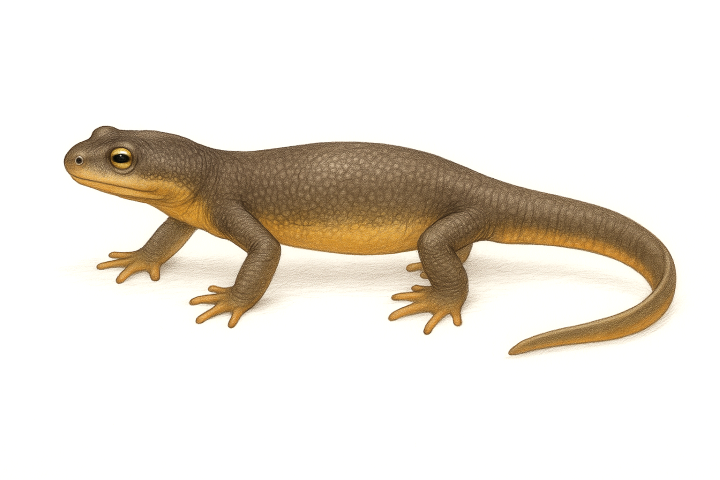
The California Newt is one of the West Coast’s most iconic amphibians, with its bright orange belly and slow, deliberate movements. This land-loving newt might not look flashy at first glance, but it’s got a powerful defense system and lives a double life — spending part of the year wandering through dry woodlands and the rest breeding in freshwater streams. It’s a favorite among hikers and nature fans in California who often spot them crossing trails after the rains.
Size & Physical Appearance
Adult California Newts usually measure between 5 to 8 inches long from snout to tail. Their most noticeable feature is their vivid orange or yellowish-orange belly, which contrasts with their rough, brownish or olive-colored back. This coloration is not just for show — it’s a warning sign to predators that this newt is toxic.
Their skin texture looks dry and grainy when they’re on land but becomes smoother when they return to the water to breed. During the breeding season, males develop noticeable smooth swollen cloacal areas and have slightly more pronounced tail fins.
Juveniles, also called efts, are smaller and often have slightly duller coloring, but they share the same overall coloration pattern as adults.
Habitat and Range
California Newts are found along the coastal and foothill regions of California, from Mendocino County in the north down to San Diego County in the south. They mostly live below 6,000 feet elevation.
These newts thrive in a variety of habitats, including oak woodlands, chaparral, moist forests, and coastal scrub. They spend most of the year on land beneath logs, rocks, or leaf litter. But once the rains arrive — usually between late fall and early spring — they migrate to nearby streams, ponds, and quiet pools to breed.
Diet
In the wild, California Newts feed on a mix of small invertebrates. Their diet includes:
- Insects
- Worms
- Insect larvae (like mosquito larvae)
- Small crustaceans
- Mollusks
- Occasionally tadpoles or eggs of other amphibians
They use a sticky tongue to capture prey, similar to frogs and other salamanders.
Lifespan
In the wild, California Newts can live for 10 to 15 years. In captivity, with proper care and a safe environment, they may live even longer — sometimes up to 20 years.
Identification Tips
California Newts might be confused with their close relative, the Rough-skinned Newt (Taricha granulosa), especially where their ranges overlap in Northern California. Here are some ways to tell them apart:
- Skin texture: California Newts have drier, more “pebble-grain” textured skin compared to the rough-skinned newt’s smoother, wetter-looking skin.
- Range: California Newts are mostly found in central and southern California. If you’re further north (like Oregon or Washington), you’re probably looking at a Rough-skinned Newt.
- Eyes: The irises of California Newts are light-colored and clearly visible from above, while rough-skinned newts have darker irises that don’t stand out as much.
Fun Fact
California Newts produce tetrodotoxin, the same deadly neurotoxin found in pufferfish. It makes them highly toxic if eaten. Amazingly, newt predators like garter snakes in some regions have evolved resistance — kicking off a “chemical arms race” between predator and prey. It’s a fascinating example of coevolution in action.
Looking to spot one? Your best bet is to hike along moist forest trails shortly after a good rain in winter or early spring. Just remember: admire with your eyes, not your hands. Their skin toxins can irritate yours, and they’re best left undisturbed in the wild.