
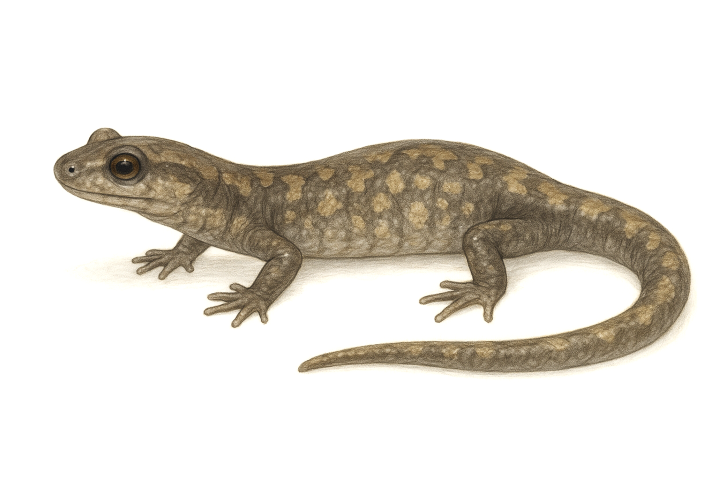
If you’ve ever turned over a mossy log in the Pacific Northwest and spotted a small, mysterious salamander with cloudy markings, you might have had a run-in with the Clouded Salamander. This lesser-known amphibian isn’t flashy, but it has a quiet charm all its own. It’s a forest dweller with a fascinating lifestyle and some very cool survival skills tucked up its sleeve—well, if it had sleeves.
Size & Physical Appearance
Clouded Salamanders are on the smaller side, usually measuring around 2.5 to 4 inches long, including the tail. They have slender bodies and long legs with strong toes for gripping surfaces—a handy feature for their climbing habits.
What really sets them apart is their color pattern. Their base color is a dark brown or gray, but it’s overlaid with a kind of cloudy, silvery marbling. The effect looks almost like a low fog settling across their backs, which is probably where they get their name. Their bellies tend to be a lighter gray, and juveniles often look similar to adults—just tinier and sometimes with slightly more contrast in their markings.
Habitat and Range
These salamanders are true Pacific Northwesterners. You’ll mostly find them in western Oregonnorthwestern California</strong. Their range hugs the coastal forests, right where the trees drip with moss and the understory is shaded and damp.
Clouded Salamanders love old forests—especially those with plenty of downed logs and decaying stumps. They’re also a bit altitude-loyal, typically living from sea level up to around 4,000 feet. Unlike some of their moisture-dependent cousins, these salamanders can sometimes be found in surprisingly dry areas—as long as there’s enough cover to keep things cool and damp underneath.
Diet
Like most small amphibians, Clouded Salamanders are insectivores. They feed on a mix of tiny invertebrates, including ants, beetles, spiders, mites, and springtails. Think of them as nature’s miniature pest-control specialists in a forest ecosystem. They use ambush tactics—waiting patiently before striking like a little ninja—relying on their sticky tongue to snatch up tasty prey.
Lifespan
In the wild, Clouded Salamanders can live around 5 to 10 years, though reaching the upper end of that range depends a lot on their environment staying stable. In captivity, with ideal care, they might live a bit longer, but they aren’t commonly kept as pets or studied in home settings, so data is limited.
Identification Tips
There are a few salamanders in the Pacific Northwest that could be mistaken for the Clouded Salamander, but a few features can help you tell them apart:
- Long-toed Salamander: Has yellow or orange stripes down its back and is generally chunkier. Clouded Salamanders don’t have bright colors or stripes.
- Ensatina: These guys can come in various colors, including mottled browns, but they have constrictions at the base of their tails—a weird little pinch that Clouded Salamanders lack.
- Western Red-backed Salamander: Similar size and some overlap in range, but it usually has a more distinct stripe pattern and less cloudy marbling.
Also worth noting: Clouded Salamanders are great climbers, which isn’t something you can say about most similar-looking forest salamanders.
Fun Fact
Clouded Salamanders are lungless. That’s right—they breathe entirely through their skin and the moist tissues in their mouth and throat. For this to work, they need constant moisture. It’s one of the big reasons they stick to damp, dark areas and come out mostly at night or during wet weather. It also makes them sensitive to changes in their environment—especially things like logging or drying out of forest floor habitat.
In Summary
The Clouded Salamander may not be the most famous amphibian in the U.S., but it’s an important part of the Pacific Northwest forest ecosystem. With its unique clouded pattern, quiet lifestyle, and amazing ability to breathe through its skin, it’s one of those species that proves amphibians are way cooler than they often get credit for. If you’re ever hiking in western Oregon or northern California and flip over a log (carefully!), you just might meet one of these little forest residents up close.
Just remember: always put logs and rocks back where you found them—these tiny creatures depend on things staying just how they are.