
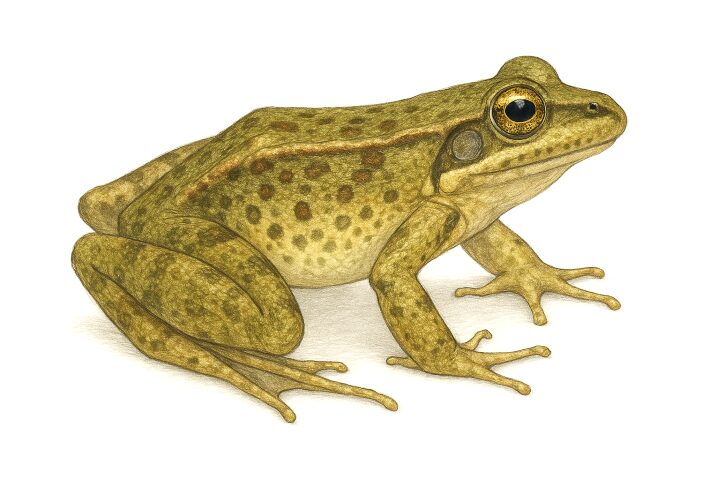
The Foothill Yellow-legged Frog (Rana boylii) is a special amphibian of the western United States, best known for its love of fast-moving, rocky streams. If you’re hiking near a river in California or southern Oregon and spot a small frog hopping across the gravel with yellowish legs, you might have met one.
These frogs aren’t just pretty—they’re also pretty picky. They rely on very specific habitats, which makes them a strong indicator of stream health. Sadly, this also means they’re disappearing in some regions. But their unique behaviors and striking appearance make them a frog worth knowing.
Size & Physical Appearance
Foothill Yellow-legged Frogs are on the smaller side, growing to about 1.5 to 3 inches (snout to vent).
Their name comes from the yellow coloring on the underside of their rear legs, which can range from pale yellow to a bright golden hue. The rest of their body tends to be a mottled gray, brown, or olive—perfect for blending into the rocks and gravel of their streamside homes.
You might notice a few other features if you look closely:
- A slightly pointed snout
- Granular skin texture
- No prominent dorsolateral folds (those “lines” that run down the backs of many frogs)
- Males have swollen, darkened thumbs during breeding season
Juveniles often appear more muted in color and have less noticeable yellow on the legs until they mature.
Habitat and Range
These frogs are true stream specialists. They stick close to clear, rocky rivers and creeks with moderate to fast currents. You’ll most likely find them in:
- California’s foothills and coastal ranges
- Western Oregon
- Parts of western Nevada
They usually live at low to mid elevations, below 6,000 feet. Unlike some frogs that’ll hop into any old pond, Foothill Yellow-legged Frogs are very particular—they avoid stagnant water and need exposed gravel bars or rocks for breeding.
Because of habitat preferences, they’re most often found where forests meet open, rocky stream beds. Logging, dams, and water diversion have impacted many populations.
Diet
Like many frogs, Foothill Yellow-legged Frogs are insectivores. They eat:
- Small insects
- Spiders
- Aquatic invertebrates
One interesting behavior: while most frogs ambush their prey, this species has been observed actively foraging along riverbanks, sometimes even hopping short distances in pursuit.
Tadpoles primarily consume algae and organic debris in the stream, helping to keep their aquatic environment clean.
Lifespan
In the wild, Foothill Yellow-legged Frogs typically live 5 to 8 years, although many don’t make it that long due to predators and habitat loss. In captivity, detailed data is limited, but they may live a bit longer with ideal care.
Identification Tips
This species can be confused with other native frogs, especially:
California Red-legged Frog (Rana draytonii): These are typically larger and have noticeable red coloring on their legs and belly, plus visible dorsolateral folds.
Northern Pacific Treefrog (Pseudacris regilla): Much smaller and often greener, with a dark eye stripe running from the nose to the shoulder.
Key things to look for:
- Yellow or golden hind legs (bottom side, not top)
- Granular skin with mixed gray, brown, or olive tones
- Lack of prominent back folds
- Often seen near or in flowing water, rarely far from it
If you’re near a creek and see a bumpy frog halfway camouflaged against wet rocks, give its legs a quick look. The yellow gives it away.
Fun Fact
These frogs have a surprisingly rhythmic breeding call—a sort of “chuck-chuck-chuck” that can sound almost like pebbles knocking together underwater. It’s not as loud or musical as other frogs, but it fits right in with the sounds of rushing water. In fact, they’re one of the only amphibians in the western U.S. that breeds almost exclusively in moving streams rather than still ponds.
Plus, their egg masses are laid in shallow pools along stream edges and look like clear jelly anchored to rocks—easy to spot if you’re careful where you step.
Want to See One?
Your best bet is to explore clean, rocky rivers during late spring or early summer, especially in northern California or southern Oregon. Stick to marked trails, watch for movement near gravel bars, and keep an eye out for those characteristic yellow legs.
Just remember: they’re a protected species in many areas, so observe respectfully and never handle them unless you’re part of a permitted conservation or research project.
Quick Summary
- Scientific Name: Rana boylii
- Size: 1.5 to 3 inches
- Range: California, Oregon, parts of Nevada
- Habitat: Fast-moving, rocky streams
- Diet: Insects and aquatic invertebrates
- Special Feature: Yellow underside of the back legs
Whether you’re hiking a creek trail or learning from your living room, the Foothill Yellow-legged Frog is a great example of how a small amphibian can tell a bigger story—about clean water, healthy ecosystems, and the need to pay attention to the wild around us.