
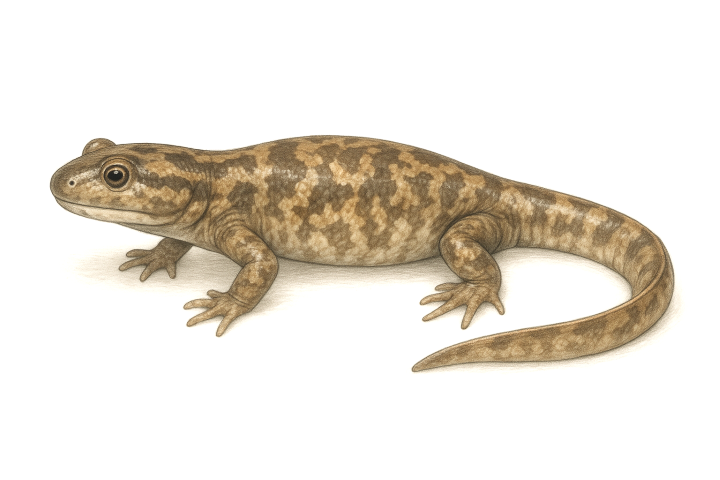
If you’re hiking through the cool, damp forests of Idaho and spot a large, chocolate-colored salamander, there’s a good chance you’ve stumbled upon the Idaho Giant Salamander. This is the largest salamander species native to Idaho, and it definitely lives up to the name “giant.” With a stocky build, marbled markings, and a powerful presence for an amphibian, it’s not easily forgotten. Even better? It’s only found in this one corner of the world, making it a true local treasure.
Size & Physical Appearance
Idaho Giant Salamanders are big by salamander standards. Adults usually range from 7 to 13 inches long, with some larger individuals reaching up to 14 inches. They have robust bodies, wide heads, and strong limbs — perfect for navigating fast-moving streams.
Their coloration is typically dark brown to black, overlaid with a striking mottled or marbled pattern in lighter tan or golden tones. The patterns can help them blend into the rocky streambeds they call home.
Juvenile salamanders are smaller and often have a more vibrant, high-contrast pattern. As they mature, their colors darken and the marbling becomes subtler. Males may have slightly longer limbs and broader heads than females, but the differences are not dramatic and can be hard to spot unless you’re looking closely.
Habitat and Range
As their name suggests, these salamanders are primarily found in Idaho, especially in the moist, forested mountainous regions of the northern and central parts of the state. They also sneak into parts of western Montana and extreme northeastern Oregon, though their range outside Idaho is quite limited.
They love cold, clean mountain streams, lakes, and seeps — particularly those surrounded by forest. You’ll usually find them at elevations of 2,000 to 7,000 feet, where mossy logs, leaf litter, and rocks offer perfect hiding spots.
Larval and aquatic adult salamanders will remain underwater, while some adults metamorphose and live mainly on land, especially during wetter months.
Diet
These salamanders are opportunistic feeders. In the wild, they gobble up just about anything they can catch, including:
- Insects and insect larvae
- Worms
- Small fish
- Other amphibians (sometimes even other salamanders!)
They use a quick strike of their sticky tongue on land or a rapid lunge in water to grab prey. The larvae are also active predators and will eat aquatic invertebrates and smaller larvae.
Lifespan
In the wild, Idaho Giant Salamanders are thought to live 10 to 15 years. In captivity, where they face fewer threats, they might live a bit longer with proper care, though they’re not commonly kept as pets due to their specific habitat needs and protected status.
Identification Tips
At first glance, Idaho Giant Salamanders might be confused with other large western salamanders, but there are a few details to help you tell them apart:
- Coastal Giant Salamander (Dicamptodon tenebrosus): Found farther west, mainly in Washington and Oregon. They can look quite similar, but their range does not usually overlap.
- Tiger Salamanders: Also large, but have rather than the marbled or reticulated look of the Idaho Giant. Tiger Salamanders also tend to prefer plains and lower elevations rather than mountain streams.
- Larval Idaho Giants have bushy external gills and a finned tail that gives them a more aquatic look, especially when they’re young.
Being endemic (native to only one region), location is often one of the best clues — if you’re in central or northern Idaho near a mountain stream, you’re likely seeing an Idaho Giant.
Fun Fact
Unlike many salamanders, some Idaho Giant Salamanders never fully metamorphose. These “neotenic” adults keep their larval features — such as gills and an aquatic lifestyle — well into adulthood. It’s like they just decided to stay as giant tadpoles for life. This flexibility helps them thrive year-round in cold mountain waters.
Final Thoughts
The Idaho Giant Salamander is not just the biggest salamander in the state — it’s also one of the most fascinating. Its secretive lifestyle, dual life on land and in water, and striking markings make it a memorable find for anyone lucky enough to spot one. If you’re exploring the mountain streams of Idaho, keep an eye out along shady stream banks, under rocks, or in quiet pools. And if you find one? Enjoy the moment, but let it stay wild. These gentle giants are a sensitive part of their fragile, high-elevation ecosystem.
Looking to learn more about other U.S. amphibians? Dive into more species profiles and keep your field guide handy on your next nature walk.