
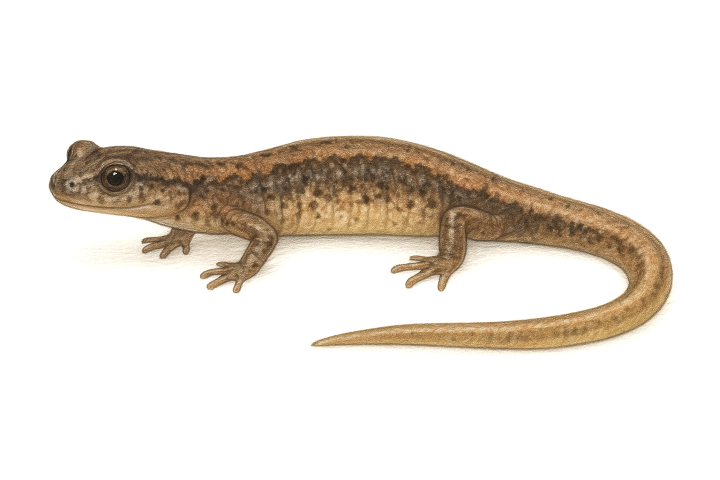
The Kern Plateau Slender Salamander is a little-known gem tucked away in the high mountains of California. With its secretive nature and remote habitat, this elusive amphibian is a rare find even for experienced herpetologists. It might be small and slim, but it plays a vital role in its mountain ecosystem — and getting a glimpse of one can feel like discovering a hidden treasure.
Size & Physical Appearance
True to its name, the Kern Plateau Slender Salamander is long and narrow. Adults usually measure about 2 to 3 inches from snout to tail, although some may reach just over 3 inches.
Its body is dark brown to black, often with a slightly lighter stripe or mottling running down the back. Some individuals show a bronze or copper sheen when the light hits just right. Its legs are short and delicate, a trait shared by other slender salamanders.
Juveniles look like smaller versions of the adults, and there aren’t major visible differences between males and females — at least not without a microscope or during breeding season.
Habitat and Range
This salamander is a true mountain specialist. It’s endemic to the Kern Plateau in the southern Sierra Nevada of California, meaning it’s found nowhere else in the world.
It lives at higher elevations, generally between 6,000 and 9,000 feet, and prefers moist, shady microhabitats like under logs, rocks, and leaf litter in mixed conifer and red fir forests. Snowmelt plays a big role in keeping its habitat damp well into summer — which is critical for such a moisture-loving animal.
Because of its limited range, it’s considered a sensitive species, and any changes to its mountain environment can have a big impact.
Diet
The Kern Plateau Slender Salamander feeds on small invertebrates like tiny insects, mites, springtails, spiders, and worms. Like many woodland salamanders, it hunts mostly at night or during wet weather when its prey is active, and its skin stays moist.
No flashy food habits here — just classic ground-level hunting, stealth, and a quick tongue.
Lifespan
In the wild, slender salamanders like this one may live 5 to 10 years, though data on this particular species is limited due to its remote habitat. In captivity, they might live longer under the right conditions, but these salamanders aren’t commonly kept in captivity — and honestly, they do best left in the wild.
Identification Tips
This salamander can be tricky to spot, and even trickier to tell apart from other closely related Batrachoseps species. A few pointers:
- Location matters: If you’re in the Kern Plateau at high elevation, this is likely your species.
- Size and build: It’s relatively robust (hence the name) compared to other slender salamanders — thicker-bodied and slightly broader-headed.
- Color: Often darker with less striping than some coastal slender salamanders. Look for that faint bronze sheen.
Because many Batrachoseps species look similar, experts sometimes need to rely on genetics or skull measurements — but for hikers and nature lovers, range and general appearance are your best clues.
Fun Fact
The Kern Plateau Slender Salamander lacks lungs! Like all slender salamanders, it breathes entirely through its skin and the lining of its mouth. That’s why staying moist is a matter of life or death — quite literally.
Wrap-Up
If you’re lucky enough to explore the high country of the Kern Plateau and happen across one of these slender salamanders, consider it a special moment. They’re small, shy, and deeply connected to their mountain home. Just remember — look, but don’t touch. Their delicate skin and limited range make them a species we should admire without disturbing.