
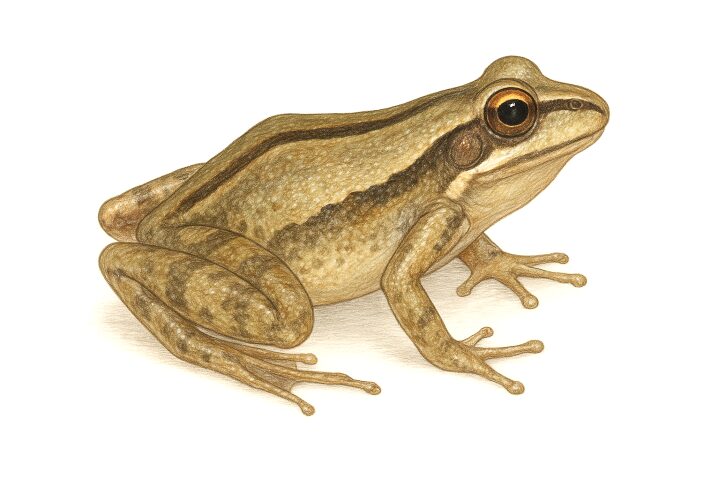
Don’t let the name fool you — the New Jersey Chorus Frog isn’t just a Garden State resident. This pint-sized amphibian lives throughout parts of the Mid-Atlantic and Southeast, and you’ll often hear it before you see it. With a distinctive, raspy call that sounds like a thumb running across a comb, these frogs are some of the earliest harbingers of spring in the eastern U.S.
Even though they’re small and pretty secretive, their chorus fills wetlands and swamps during the breeding season, sometimes creating an unforgettable nighttime soundtrack.
Size & Physical Appearance
New Jersey Chorus Frogs are small — adults usually measure about 1 to 1.5 inches long (roughly the size of a paperclip). Their coloring ranges from light gray to brown or olive, depending on where they live and the surrounding habitat.
The most distinctive feature you’ll notice is a series of three dark stripes running down the back, though sometimes the lines are broken or faint. They also have a dark stripe that runs from the snout through the eye and down the side of the body.
Unlike some amphibians, males and females look pretty similar, though males tend to be slightly smaller and have a darker throat, especially during breeding season when they’re calling.
Habitat and Range
You’ll find New Jersey Chorus Frogs in lowland forests, grassy wetlands, swamps, roadside ditches, and flooded meadows. They prefer areas with shallow water and lots of vegetation during breeding season. Outside of breeding, they’re harder to find because they stay hidden in damp leaf litter or grassy areas.
Their range includes much of the Atlantic Coastal Plain, especially:
- New Jersey (naturally)
- Delaware
- Southeastern Pennsylvania
- Maryland
- Northeastern Virginia
They’re generally found at lower elevations, typically below 1,000 feet.
Diet
Like most small frogs, New Jersey Chorus Frogs are insectivores. They feed on a variety of small invertebrates such as:
- Ants
- Beetles
- Spiders
- Flies
- Other tiny bugs they can catch on their sticky tongue
They usually hunt at night, using their camouflage to stay hidden as they pick off unsuspecting insects in the leaf litter or grass.
Lifespan
In the wild, these frogs live for about 2 to 3 years. Not a long time, but they make the most of it — especially during the short spring breeding season, when they’re actively calling, mating, and laying eggs in temporary pools.
Identification Tips
At first glance, New Jersey Chorus Frogs look similar to a few close cousins, like the Spring Peeper or the Upland Chorus Frog. Here’s how to tell them apart:
- Spring Peepers have a dark X shape on their back — not stripes.
- Upland Chorus Frogs also have stripes down their back, but their call is faster and trill-like. Regional differences can make it tricky, but the New Jersey Chorus Frog’s harsh, comb-like trill is pretty distinct.
- Look for the light stripe along the upper lip — a key feature in chorus frogs.
Your ears can also help! If you’re out near wetlands in early spring and hear a load of “creek creek creek” sounds that resemble rubbing a thumb over a plastic comb, you’re probably listening to a group of New Jersey Chorus Frogs.
Fun Fact
New Jersey Chorus Frogs are often the first frogs to start calling in late winter or early spring — sometimes even when there’s still snow on the ground! Their ability to survive chilly nights and breed in cold, temporary pools gives them a head start before larger amphibians wake up for the season.
Wrapping Up
The New Jersey Chorus Frog may be small, but it’s a vital part of its ecosystem — and a big contributor to the springtime symphony that defines wetlands in the eastern U.S. Whether you’re a fan of frogs, a budding naturalist, or just someone who loves the sounds of spring, keep an ear out after a warm rain in March. If you listen closely, you just might meet this tiny but mighty singer.