
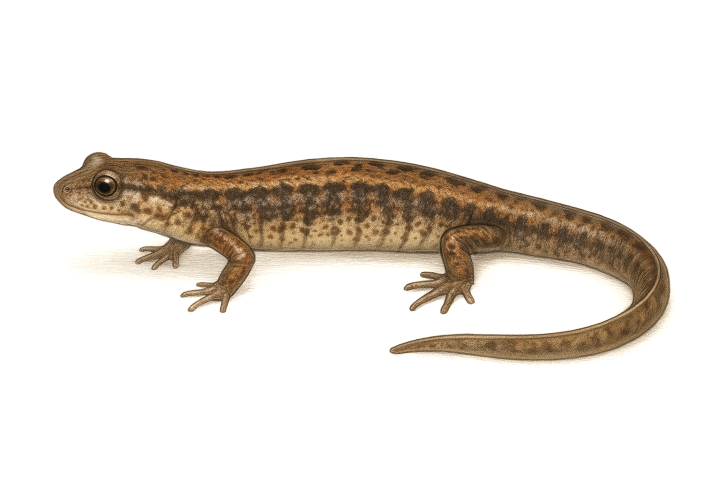
The Ocoee Salamander is a small but striking amphibian found in the misty mountains of the southeastern United States. Known for its variety of color patterns and preference for cool, shaded habitats near streams, it’s a favorite among nature lovers exploring the forests of the Southern Appalachians. If you’ve ever turned over a rock beside a mountain stream and found a little salamander scooting away, there’s a good chance it was one of these guys.
Size & Physical Appearance
Ocoee Salamanders are small and slender. Adults usually range from 3 to 5 inches long, including the tail. Their color can vary quite a bit, which makes them interesting — and sometimes a little tricky — to identify.
Most individuals have a broad red to brown stripe running down the back, bordered in black and flecked with coppery or gold speckles. But some may lack a stripe altogether and show a more uniform brown or gray color. Their bellies are generally lightly pigmented and may have a salt-and-pepper look.
Males and females look similar, but during the breeding season, males may show a swollen area at the base of the tail (called a mental gland) and slightly enlarged cheeks.
Habitat and Range
Ocoee Salamanders are native to the Southern Appalachian Mountains, mostly found in eastern Tennessee, western North Carolina, northern Georgia, and southwestern Virginia.
They prefer cool, moist environments, particularly near small streams, seeps, or spring heads in forested mountain areas. You’ll often find them under rocks, logs, or leaf litter, especially in shaded spots that stay damp. They’re usually found between 1,600 and 5,000 feet above sea level, but they can occasionally occur a little lower.
Diet
Ocoee Salamanders are insectivorous, meaning they eat mostly small invertebrates like:
- Springtails
- Ants
- Mites
- Small beetles
- Worms and other tiny soil creatures
Because they’re so small, they go for prey they can easily overpower. Their hunting method is simple but effective — sit and wait, then strike quickly with a sticky tongue.
Lifespan
In the wild, Ocoee Salamanders are believed to live 5 to 10 years. In captivity, with excellent care, they may live a little longer, but since they’re rarely kept as pets or in zoos, there isn’t much data on that.
Identification Tips
Ocoee Salamanders can look similar to a few other Dusky Salamander species in their range, but there are some clues to look for:
- Color variation is key. The red or brown dorsal stripe is often a giveaway, but not always present. Look at the edges of the stripe — they usually blend softly into the darker sides.
- Tail shape: The tail is rounded in cross-section near the base and tends to be slightly keeled (has a small ridge) toward the tip.
- Behavior and location: Compared to the Northern Dusky Salamander, for example, Ocoees are more terrestrial and more likely to be found in upland wooded areas, not just in or right next to streams.
If you’re in the mountains of Tennessee or North Carolina and spot a small salamander with some reddish color and you’re not right in a stream, it’s probably an Ocoee.
Fun Fact
Here’s a neat one: Ocoee Salamanders have no lungs. Like many salamanders in their family (Plethodontidae), they breathe entirely through their skin and the lining of their mouth. That’s why staying moist is so important for them — if their skin dries out, they can’t breathe properly.
Want to Spot One?
If you’re hiking in the Smokies or Blue Ridge Mountains on a damp spring or summer day, take a peek under a log or rock near a shaded stream. Just remember to gently replace anything you move — these tiny amphibians depend on undisturbed habitat to survive.
And don’t worry if two individuals look totally different. With all their color morphs, Ocoee Salamanders are like the tie-dye shirts of the Appalachian forest floor — no two are exactly alike.