
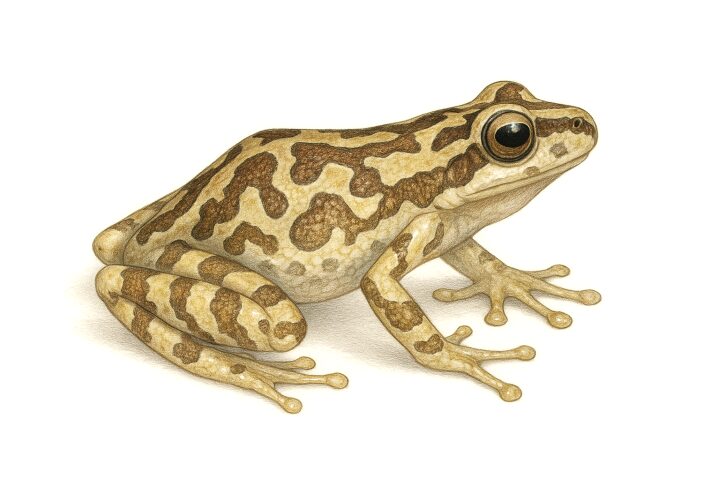
The Painted Reed Frog is a tiny, colorful species with a big personality. Despite its small size, it’s a master of disguise with skin patterns that often look like little works of art. Native to sub-Saharan Africa and introduced in other areas, you’d be forgiven for wondering why it’s on a U.S.-focused amphibian site — but some isolated pet releases and scientific discussion have included it in broader amphibian studies here. Still, it’s not native to the U.S., so this little frog serves more as a fun educational detour than a local resident.
Size & Physical Appearance
Painted Reed Frogs stay pretty small, usually between 1 to 1.5 inches long (2.5 to 4 cm). But don’t let their size fool you — their color and patterns can be spectacular. Their skin can range from cream or yellow to bright green or even orange, and they’re often marked with black or brown blotches, stripes, or marbled patterns.
Some individuals change color between day and night or even depending on mood or environment. Males tend to have more prominent vocal sacs, which inflate like bubbles during calling. Juveniles are often more uniformly colored and develop more pattern as they mature.
Habitat and Range
Painted Reed Frogs are native to sub-Saharan Africa, where they live in a wide range of habitats — from wetlands and marshes to savannas and moist forests. They favor areas near standing water with lots of reeds and grasses for hiding and calling.
While not native to the United States, they are sometimes kept in captivity or show up in imported shipments of tropical plants or exotic pet trade circles. So while you won’t find them in the wild in the U.S., they’re a popular species among amphibian enthusiasts and frog hobbyists.
Diet
These frogs are insectivores. In the wild, Painted Reed Frogs feast on tiny insects and arthropods like mosquitoes, ants, small flies, and other invertebrates. They’re ambush predators, meaning they sit still and wait for prey to get close before snapping it up with their sticky tongue.
If you’re keeping one in captivity (with proper permits and care), they’ll gladly eat small crickets, fruit flies, or other tiny feeders.
Lifespan
In the wild, their lifespan is usually around 5 years, though this depends on local conditions and predation. In captivity, with good care, they might live up to 6 to 8 years.
Identification Tips
Painted Reed Frogs are sometimes mistaken for other small African treefrogs, like Hyperolius viridiflavus. To tell them apart:
- Look for broad, bold blotches or marbling on the back — Painted Reed Frogs have a kind of “swirly” or irregular pattern.
- Their fingers and toes have flat, round toe pads that help them cling to stems and leaves, a treefrog trait.
- Males have a prominent vocal sac that inflates during calling — it looks like a bubble under the chin and is often pale or translucent.
Also, remember that color can vary a lot. These frogs can lighten or darken based on temperature, time of day, or stress.
Fun Fact
Painted Reed Frogs can actually change their color over time — not just as they grow but even throughout a single day. Scientists believe this helps them regulate their temperature or blend with different surroundings. Think of it like a frog version of changing outfits to match the weather.
Note for U.S. Readers
While Painted Reed Frogs are not native to the U.S., they’re sometimes talked about in the context of the exotic pet trade or ecological studies. If you’re interested in keeping one, make sure to check your local and federal regulations — some places restrict the import or ownership of exotic amphibians to prevent accidental introductions or disease spread.
They’re a great species to learn about, especially if you’re curious about how different frogs adapt to different parts of the world.
In Summary
The Painted Reed Frog may not be a native U.S. amphibian, but its striking appearance, adaptable nature, and color-shifting skills make it a fascinating species to discover. Whether you’re a frog fan, student, or budding herpetologist, it’s a fun glimpse into the diversity of amphibians across the globe.