
If you’re hiking through the forested hills of the southern Appalachians and flip over a damp log or rock, you might meet the elusive Sequoyah Slimy Salamander. This secretive creature is part of the lungless salamander family, which means it actually breathes through its skin. Pretty wild, right? It’s named after Sequoyah, the famous Cherokee scholar, and like its namesake, this little amphibian is a pretty special part of regional heritage.
Size & Physical Appearance
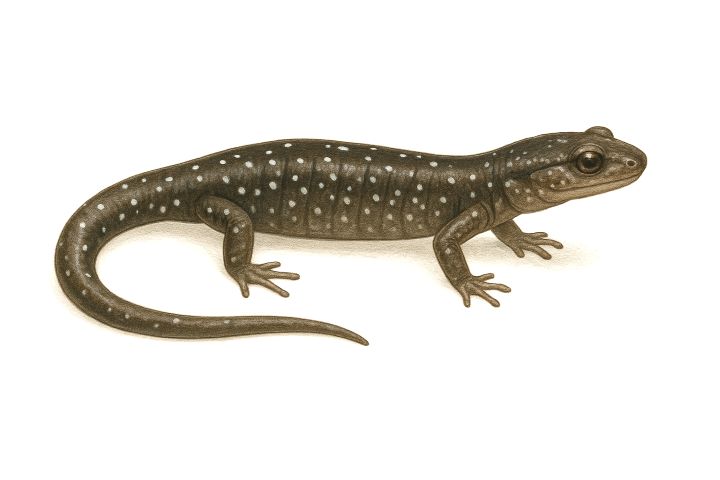
The Sequoyah Slimy Salamander is a medium-sized salamander, usually ranging from 4 to 6 inches long, including the tail. Its body is dark black or charcoal gray, speckled with white or silver spots that can look almost like a starry night sky. The patterns vary a bit between individuals, but they usually have more spotting on the sides than on the back.
The belly is a paler gray. Males and females look fairly similar, though during breeding season, males may develop a bit of swelling around the cloaca (the multipurpose opening underneath).
Habitat and Range
You won’t find this salamander just anywhere. The Sequoyah Slimy Salamander has a pretty limited range. It’s only been documented in a small area of the Ouachita Mountains in southeastern Oklahoma, mainly within or near the borders of Sequoyah County — hence the name.
It prefers moist, forested hillsides with lots of rocks and logs to hide under. Like many salamanders in the Plethodon group, it’s a homebody and rarely strays far from its cool, damp hiding spots. You’re most likely to find one between 900 and 2,500 feet in elevation.
Diet
Sequoyah Slimy Salamanders are nocturnal hunters. At night, they come out to search for a variety of small invertebrates. Their diet consists mainly of things like:
- Insects (like beetles, ants, and flies)
- Spiders
- Worms
- Small snails or slugs
These salamanders are sit-and-wait predators, meaning they’ll stay still and strike when unsuspecting prey comes close. It’s a simple but effective hunting method.
Lifespan
In the wild, they can live for up to 10 years, possibly even a little longer if conditions are stable. There’s not a ton of data on their lifespan in captivity since they’re not commonly kept, but similar species can live for more than a decade if well cared for under naturalistic settings.
Identification Tips
The Sequoyah Slimy Salamander can be tricky to tell apart from other “slimy salamanders” in the Plethodon glutinosus complex, especially if you’re not in their core range. But here are a few keys to spotting them:
- Range is the biggest clue: If you’re in southeastern Oklahoma, especially near Sequoyah County, you’re probably looking at a Sequoyah Slimy.
- Look for black or dark gray skin with fine white or gray speckling, mostly on the sides and limbs.
- The tail is round, not flattened, and they have no external gills.
Sometimes people confuse these salamanders with juvenile Eastern Tiger Salamanders or other local Plethodon species, but the slim, unstriped body and speckled pattern should set them apart.
Fun Fact
These salamanders get the “slimy” part of their name from a thick, sticky mucus they secrete when threatened. This goo is not just gross — it’s actually a defense trick. The slime can make it tough for predators (like snakes or small mammals) to get a good grip, and in some species, it’s even mildly toxic or irritating.
In Summary
The Sequoyah Slimy Salamander is a quiet forest dweller that plays an important role in its ecosystem, helping control insect populations and serving as prey to larger animals. It might not make headlines, but it’s a beautiful example of the small, hidden wonders that live in our southeastern woodlands.
If you’re ever hiking in the Ouachita Mountains, keep your eyes peeled — just remember to place any rocks or logs back exactly where you found them. These little guys rely on the moist microhabitats those objects provide to stay cool, damp, and safe.
And one last tip: if you handle a salamander (gently, with wet hands), always put it back right where you found it. Their skin is super sensitive, and oils or chemicals from humans can be harmful.