
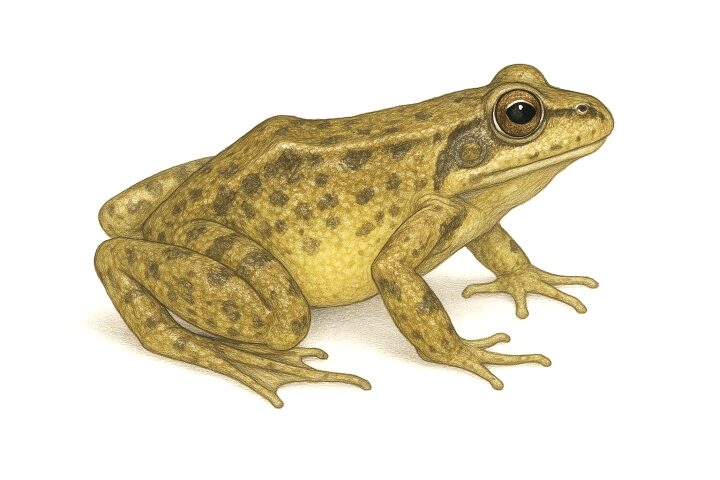
The Sierra Nevada Yellow-legged Frog is a small but mighty amphibian that lives high in the mountains of California. It’s named for its bright yellow legs and belly, and it’s known for its incredible adaptations to cold, alpine environments. Sadly, it’s also one of the most endangered frogs in the United States, but conservation efforts are offering hope. If you’ve ever hiked in the Sierra Nevada and spotted a frog sunning itself near a mountain lake, it might have been this hardy little survivor.
Size & Physical Appearance
Sierra Nevada Yellow-legged Frogs range from about 1.5 to 3.2 inches long. They have a squat body with long legs and rough, bumpy skin. Their color varies from brownish to olive green, often with darker spots or blotches on the back. The underside, especially the legs and belly, tends to be a bright yellow or orange-yellow — a standout feature.
Unlike some frog species, there aren’t major visible differences between males and females, though males may be slightly smaller and develop nuptial pads (small dark patches on their thumbs) during breeding season.
Habitat and Range
These frogs are true mountain dwellers. You’ll find them only in the Sierra Nevada range of California, usually at elevations between 4,500 and 12,000 feet. They hang out in clear, cold alpine lakes, ponds, and slow-moving streams — basically any body of water that sticks around through the summer. They need these water sources for breeding, and they often overwinter under ice in these same spots.
One thing that sets this frog apart is its close connection to a very narrow elevation band and specific type of habitat. They truly rely on remote, undisturbed wilderness areas.
Diet
The Sierra Nevada Yellow-legged Frog isn’t picky when it comes to food, but it does need to eat a lot during the short alpine summer. In the wild, it feeds on a mix of insects and other small invertebrates like beetles, flies, spiders, and even aquatic larvae.
Tadpoles mostly feed on algae and organic debris in the water.
Lifespan
In the wild, these frogs can live for around 10 to 15 years, which is pretty long for a frog. That said, they face so many threats — from disease to habitat loss — that many unfortunately don’t make it that far. In captivity, when cared for properly, they’ve been known to reach similar or slightly longer lifespans.
Identification Tips
If you’re trying to tell a Sierra Nevada Yellow-legged Frog apart from similar species, here are a few things to look for:
- Yellow coloring on the belly and legs: This is the easiest field mark to remember. Other frogs in the area may be brown or green all over, but this one often flashes yellow underneath when it hops.
- No dorsolateral folds: Many North American frogs have two raised ridges running down their backs (called dorsolateral folds). This species doesn’t — their backs are smooth or just bumpy without distinct folds.
- Spends a lot of time in water: While many frogs dart in and out of ponds, the Sierra Nevada Yellow-legged Frog is almost always in or near water, especially during the warm months.
Visually, it may resemble the closely related Mountain Yellow-legged Frog (Rana muscosa), but the two are actually different species now. Their ranges overlap in some areas, but Rana sierrae is more widespread in the northern and central Sierra Nevada. For most people outside the scientific community, though, telling the two apart in the field is extremely difficult.
Fun Fact
These frogs have one really unusual trait — they can survive frozen winters by going into a kind of “frog hibernation” under water, even beneath ice sheets. They slow down their metabolisms and wait out the cold months in near-freezing temperatures. Some have been known to spend over 7 months a year in hibernation!
Why They Matter
The Sierra Nevada Yellow-legged Frog plays a big role in mountain aquatic ecosystems. As both predators and prey, they help keep insect populations balanced and provide food for birds, snakes, and mammals. They’re also considered an indicator species — meaning their health reflects the health of the larger environment.
Unfortunately, this species has seen massive declines due to a combination of factors including the deadly chytrid fungus (a disease affecting amphibians worldwide), habitat changes, invasive trout (which eat frog eggs and tadpoles), and climate impacts.
Many state and federal efforts are now underway to help bring them back, from breeding programs to habitat protection. If you’re out exploring alpine lakes in California, keep an eye out — just seeing one of these frogs is a pretty special experience these days.
In Summary
- Scientific name: Rana sierrae
- Size: 1.5 to 3.2 inches
- Habitat: Alpine lakes and streams in the Sierra Nevada
- Range: Central and northern Sierra Nevada, California
- Diet: Insects, aquatic invertebrates, algae
- Lifespan: 10 to 15 years in the wild
Want to help frogs like this one? If you’re hiking in sensitive alpine areas, avoid walking through shallow ponds, clean your boots to prevent spreading disease between sites, and learn more about frog conservation in your area. Every little bit helps.