
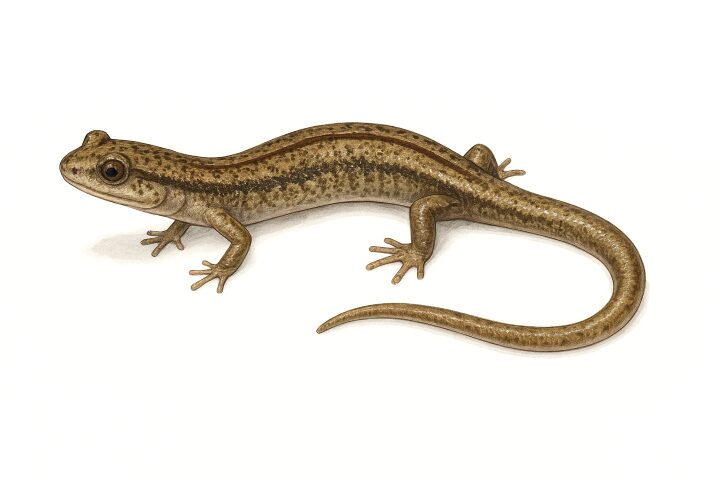
Meet the Valdina Farms Salamander, a rare and fascinating amphibian that lives most of its life underground. This species is what biologists call a “troglobite,” which means it’s specially adapted to live in dark cave systems. With its ghostly appearance and secretive lifestyle, it’s one of nature’s true hidden gems—literally.
Size & Physical Appearance
Valdina Farms Salamanders are on the smaller side, generally growing to about 2 to 3 inches long. They have a pale, pinkish-gray to translucent white color that helps them blend into their cave environments. Because they live in complete darkness, they’ve lost all pigment in their skin and have reduced or absent eyes, depending on the individual.
You might notice external gills behind the head—bright red and feathery. These gills are a key feature in aquatic salamander species and help with breathing in low-oxygen cave water.
There’s little visible difference between males and females, especially given their remote habitat and small size.
Habitat and Range
This salamander is found only in a very small area of the world: Valdina Farms Sinkhole in Medina County, Texas. That’s it—just one known location. It lives in the aquifer-fed cave systems beneath the surface, spending its entire life in cool, dark, aquatic environments.
These underground waters are part of the Edwards-Trinity aquifer system, so the salamander’s survival depends heavily on groundwater quality and flow.
Diet
In the wild, the Valdina Farms Salamander likely eats tiny aquatic invertebrates such as insect larvae, small crustaceans, and worms. Because of its subterranean lifestyle, what it eats depends on whatever small prey drifts into the cave system.
Researchers believe it uses its sense of smell and touch to locate food, since it can’t rely on vision.
Lifespan
The exact lifespan is unknown, but similar cave-dwelling salamanders can live up to 10 years in the wild, sometimes longer in undisturbed conditions. Because this species hasn’t been studied in detail, we don’t have a solid number for how long they live in captivity—if they’ve even been kept successfully at all.
Identification Tips
Here’s how to spot—or more realistically, identify—a Valdina Farms Salamander if you’re reviewing scientific surveys or photos:
- Lack of skin pigment: They appear pinkish or translucent white.
- Reduced or missing eyes: Adapted to dark cave environments.
- External gills: Bright red and feathery, sticking out behind the head.
- Small size: Only about 2 to 3 inches long.
This species resembles other blind cave salamanders, like the Texas blind salamander (Eurycea rathbuni), but their ranges don’t overlap and their body shapes and proportions differ slightly. The Valdina Farms Salamander has a more elongated body and slightly different gill structure.
That said, unless you’re a trained researcher or herpetologist with access to specimens or caves, you probably won’t be identifying this species in the wild. It’s that hard to find.
Fun Fact
The Valdina Farms Salamander may have evolved from a surface-dwelling species that got trapped underground long ago. Over time, it lost its eyesight and pigmentation—classic traits of “cave blindness.” It’s a living example of how evolution can shape creatures to fit extreme environments.
Why It Matters
Even though most people will never see a Valdina Farms Salamander, protecting its habitat is important. Because this species lives in an aquifer, it’s also a good health indicator for the groundwater that people and other animals depend on.
Species like this remind us that even in the darkest, quietest corners of the world, life finds a way.