
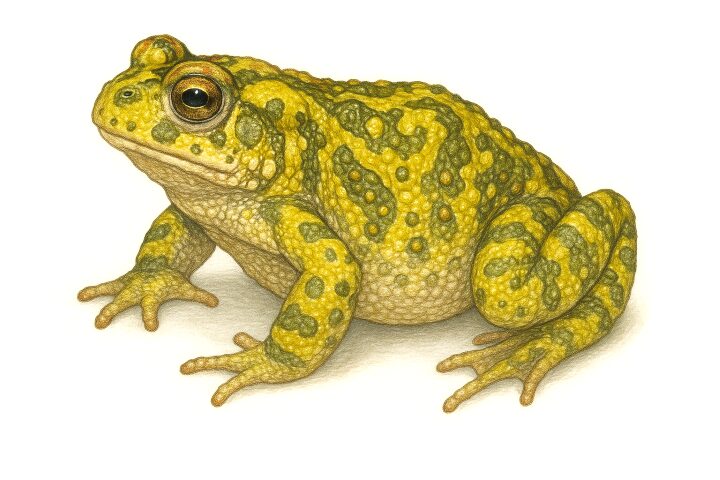
The Yosemite Toad (Anaxyrus canorus) is a high-elevation amphibian that lives almost exclusively in the scenic alpine meadows of California’s Sierra Nevada. Unlike many other toads, this species has a striking appearance, a unique voice, and a limited range, making it a standout for amphibian lovers and conservationists alike. If you’ve ever wandered through a mountain meadow near Yosemite in early summer, you might’ve been lucky enough to hear their musical trills echoing across the wetlands.
Size & Physical Appearance
Yosemite Toads are relatively small compared to some other toads, with adult males typically reaching about 1.5 to 2.2 inches long. Females are larger, growing up to 2.8 inches. The sexes also look quite different. Males tend to be vivid yellow-green or olive with dark black blotches, while females and juveniles often have a more muted gray-brown or tan color with lighter spots or a “salt and pepper” pattern. Both sexes have a plump body and dry, warty skin typical of toads, but the female’s duller colors help her blend in with the landscape.
Habitat and Range
This toad is a true mountain dweller. It’s found only in California’s central Sierra Nevada, mainly in alpine and subalpine meadows between elevations of about 6,400 and 11,300 feet. Yosemite Toads rely on shallow, sunny pools and slow-moving streams for breeding, often in snowmelt-fed meadows that are wet for just a few months each year. Outside of the breeding season, they spread out into nearby grassy areas and forest edges to forage.
Diet
Like most toads, the Yosemite Toad is an opportunistic predator. It feeds mainly on small invertebrates like beetles, ants, flies, spiders, and caterpillars. Tadpoles graze on algae and organic detritus in the water. These toads are most active during warm, wet conditions, so their feeding is usually concentrated in a relatively short summer window.
Lifespan
In the wild, Yosemite Toads can live for around 10 to 15 years, though survival rates vary depending on environmental conditions and predation. Their long lifespan is partly necessary because they live in such a tough climate and may not breed every year, especially if snowpack melts too late or the meadow dries out too quickly.
Identification Tips
To identify a Yosemite Toad, start by checking your elevation — you’re unlikely to find one outside its mountain range. Males have vibrant yellow-green coloring that’s almost neon when freshly emerged from hibernation, with large dark spots and no mid-dorsal stripe (a line down the back that’s common in other toads). Females can be trickier, but they lack the reddish or orangish hues you’d see in nearby Western Toads (Anaxyrus boreas). Yosemite Toads also have a relatively short and rounded snout and no visible cranial crests.
Fun Fact
Yosemite Toads don’t croak like most people expect. Instead, males produce a high-pitched, musical trill that lasts several seconds and sounds more like a bird than a typical toad. These calls are used during the brief mating season, when the meadows are alive with the sound of dozens of males trying to attract a mate. If you’re hiking in early summer and hear what sounds like an old phone ringing from a puddle, you might be hearing one!